
Introduction
Lithium Iron Phosphate (LiFePO4) chemistry has fundamentally shifted the economics of solar storage. Unlike legacy deep-cycle lead-acid banks that degrade rapidly past 50% Depth of Discharge (DoD), tier-1 LiFePO4 cells are regularly marketed with 6,000+ cycle ratings at 80% DoD.
But what does this actually mean for an enterprise deployment? In this engineering breakdown, we explore the degradation curves of modern lithium systems and how to optimize your Battery Management System (BMS) parameters for maximum ROI.
Core Explanation: What is DoD?
Depth of Discharge (DoD) refers to the percentage of the battery's total capacity that has been consumed. If you have a 100kWh battery bank and you use 80kWh, your DoD is 80%.
With lead-acid, engineers historically hard-capped systems at 50% DoD to prevent sulfation and premature death. LiFePO4 changed the rules. However, the misconception that lithium can be drained to 0% daily without consequence continues to plague commercial installations.
Technical Breakdown: The Degradation Curve
When analyzing tier-1 cells under laboratory conditions, we see a distinct correlation between DoD and total cycle life:
- 100% DoD Daily: ~2,500 - 3,000 cycles (approx. 7-8 years)
- 80% DoD Daily: ~6,000 cycles (approx. 15-16 years)
- 50% DoD Daily: ~8,000+ cycles (approx. 20+ years)
Pushing a battery to its absolute limit every night stresses the chemical structure, leading to accelerated capacity fade. By configuring the inverter's cutoff voltage to reserve the bottom 15-20% of the battery, we exponentially increase the asset's lifespan.
The Role of the BMS
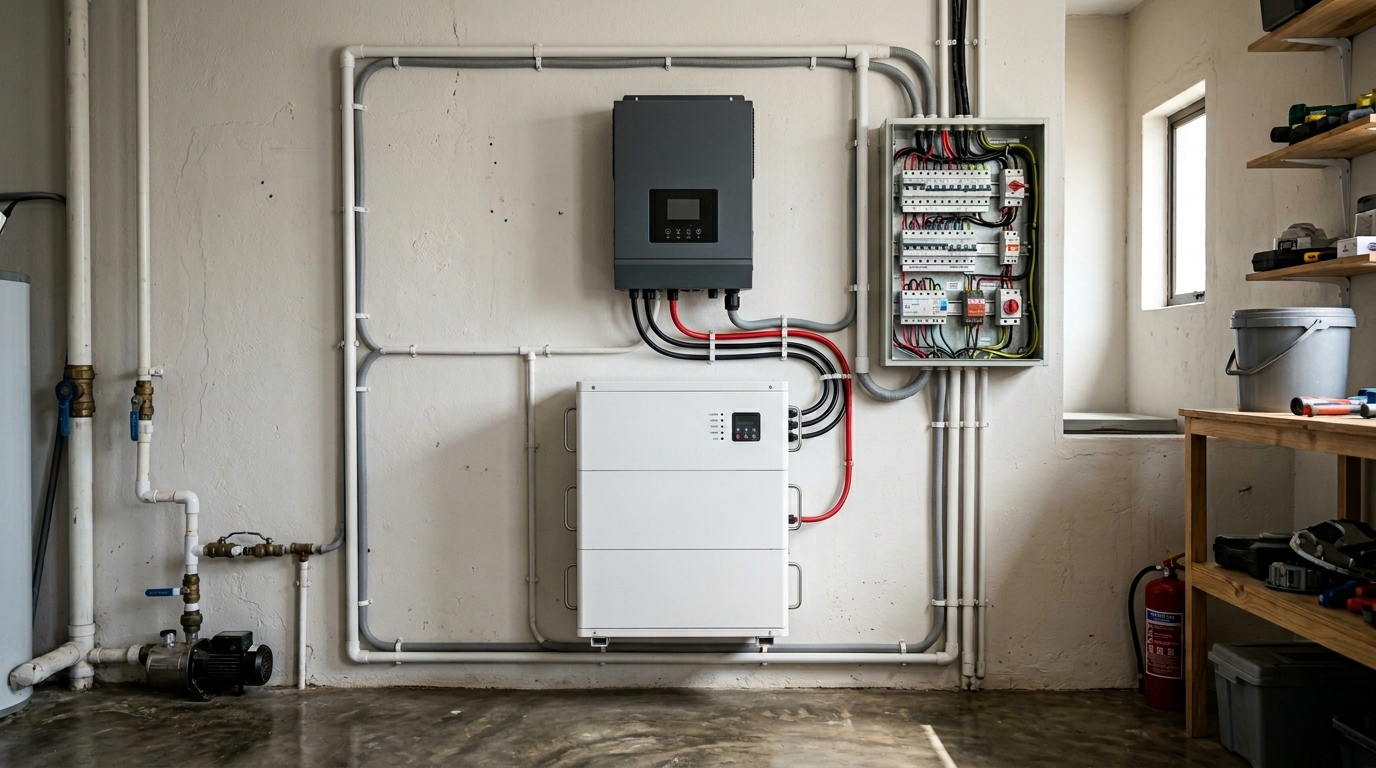
A high-quality Battery Management System is the brain of your storage rack. It actively monitors cell voltage, temperature, and current. At Solagates, our engineers program the BMS to enforce a soft cutoff at 20% State of Charge (SoC), meaning the system operates at a maximum 80% DoD.
"A well-configured BMS doesn't just protect the battery; it guarantees the financial return on your solar investment."
Financial Implications
Consider a commercial facility installing a 100kWh rack.
If drained to 100% daily, the battery may need replacement in 7 years. If managed intelligently at 80% DoD, the same battery bank will serve the facility for over 15 years. The difference in CapEx over a 20-year period is massive, completely altering the Levelized Cost of Energy (LCOE) equation.
Engineering Insights
When sizing a system, always calculate the required load and then dimension the battery bank so that the nightly load only consumes 80% of the total capacity.
- Calculate total night load (e.g., 80kWh)
- Divide by 0.8 to find total required capacity
- Install 100kWh to ensure optimal DoD
This buffer not only protects the cells but also provides emergency reserve power during unexpected grid failures or extended cloudy days.
Key Takeaways
- LiFePO4 batteries are vastly superior to lead-acid, but they are not invincible.
- Limiting daily discharge to 80% DoD doubles the lifespan of the battery bank.
- Proper BMS configuration is critical to enforcing these limits.
- System sizing should always factor in the 20% reserve buffer.
Conclusion
Maximizing the ROI of an enterprise solar installation requires more than just buying premium hardware; it requires intelligent engineering and programming. By understanding and respecting the physics of Depth of Discharge, commercial facilities can ensure their lithium storage systems outlast their warranties.
Need Help Choosing The Right Battery System?
Our engineering team can analyze your load profile and design a lithium storage system optimized for maximum lifespan.
<div className="my-8"> <a href="/contact" className="inline-block bg-accent text-primary font-display font-bold text-sm uppercase tracking-widest px-8 py-4 rounded-full hover:bg-primary hover:text-white transition-colors shadow-md"> Get Free Consultation </a> </div>